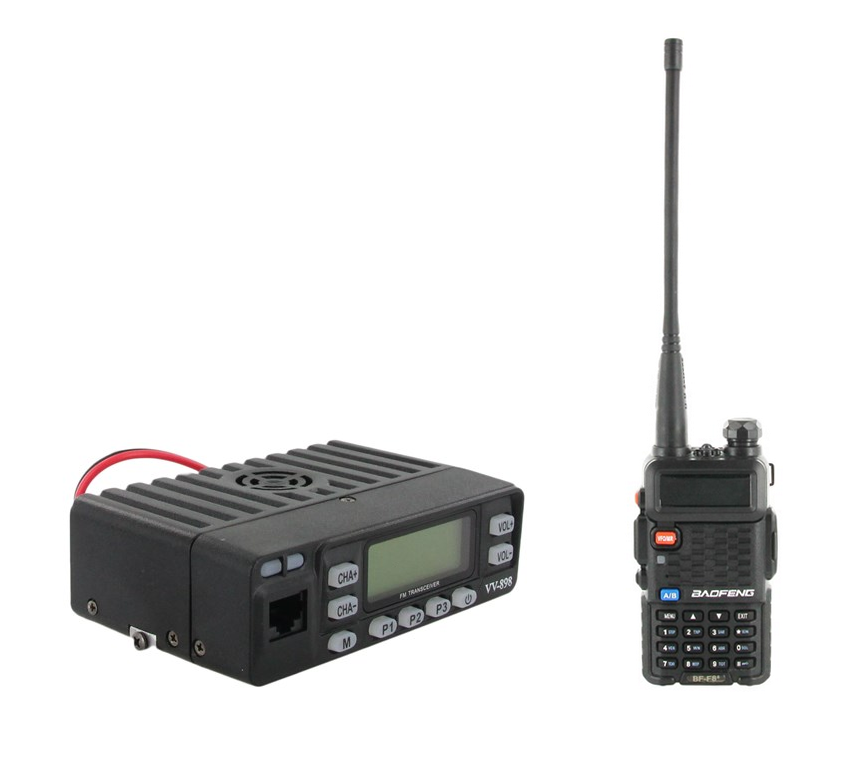
 Ring in the new year with a Leixen VV-898 and free Baofeng BF-F8+ combo from Buy Two Way Radios!
The Leixen VV-898 is a nifty little low-powered mobile two way radio that's also very economical, which makes it a pretty good deal. Now the deal is even better! For a limited time, when you buy a Lexien VV-898, you also get a Baofeng BF-F8+ handheld radio, FREE!
The The Baofeng BF-F8+ is a small, yet powerful dual band transceiver that operates on UHF and VHF amateur frequencies. It has the features of Baofeng's popular UV-5R with a little extra class for added value.
No promo code is necessary. When you buy a Leixen VV-898, your free BF-F8+ be added to the shopping cart automatically, bundled with your purchase. There's no purchase limit, either. Purchase one, two or more Lexien VV-898 radios and you get a free BF-F8+ with each one, but only while supplies last. Offer valid until January 31, 2015 or until the last Baofeng is gone, whichever comes first. There are no rainchecks, so get yours now while you can!
[related_products is_auto_added="1"]
For a limited time, when you buy a Lexien VV-898 from Buy Two Way Radios, you also get a Baofeng BF-F8+ handheld radio, FREE!
We tell you how you can convert a portable handheld walkie-talkie into a mobile radio for your vehicle. We also review the Leixen VV-898 UHF/VHF Dual Band Mobile Two Way Radio.
Intro :00
Billboard 1:22
Discussion Topic 1:40
We tell you how to turn a handheld radio into a mobile radio. We'll discuss the advantages of doing it, what you need to make it work, and suggest some makes and models of handheld radios that you can turn into mobiles.
Commercial Break 18:08
buytwowayradios.com 1:00
Product Review 19:03
We review the Leixen VV-898 UHF/VHF Dual Band Mobile Two Way Radio.
Questions and Answers 32:22
Questions from readers of our Two Way Radio Blog and members of the Two Way Radio Forum.
Wrap up and Close 36:08
Send in your comments and questions for Danny, Anthony and Rick to show[at]buytwowayradios.com. Feedback on this and other topics will be read by the hosts and included in future episodes of the show. Visit us at www.twowayradioshow.com!
© 2014 Cricket Ventures, LLC. All rights reserved.
Podcast: Download (Duration: 36:48 — 33.7MB) | Embed
Subscribe: Apple Podcasts | Spotify | Email | RSS | More
[related_products is_auto_added="1"]We tell you how you can convert a portable handheld walkie-talkie into a mobile radio for your vehicle. We also review the Leixen VV-898 UHF/VHF Dual Band Mobile Two Way Radio.
All of us at Buy Two Way Radios would like to wish you a very happy and safe holiday season! Our offices will be closed for the day on Wednesday, December 24 and Thursday, December 25, 2014. If you need assistance, please send us an e-mail, visit our forums or give us a call after 8 AM EST Friday, December 26, 2014. Have happy holidays and please stay safe while traveling.
[related_products is_auto_added="1"]
All of us at Buy Two Way Radios would like to wish you a very happy and safe holiday season! Our offices will be closed for the day on Wednesday, December 24 and Thursday, December 25, 2014. If you need assistance, please send us an e-mail, visit our forums or give us a call after […]
Updated October 27, 2025.
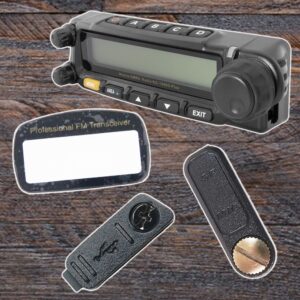 Wouxun manufactures some very good radios, and some of them are quite popular with our customers. It's no wonder that we receive requests for additional, replacement or spare parts. As an authorized Wouxun dealer, Buy Two Way Radios also carries a selection of replacement parts for several models of Wouxun two way radios.
Let's say you want to be able to swap out your KG-UV920P-A between two vehicles or want to use it as a mobile in one vehicle and a base station at home. You mounted the front panel display in the dashboard of your vehicle but want a second display for the other vehicle or location. That's no longer a problem. Simply purchase an additional display, and you're set! If you need an extra one for the KG-1000G Plus mobile GMRS radio, we have it, too.
Need an extra vehicle power cord for your Wouxun mobile? The PWO-002 is it. Lost or damaged your speaker mic? The KG-UV9A is the original replacement hand speaker microphone For KG-UV920P-A and the KG-UV10A is the replacement speaker microphone for KG-UV980P.
We carry a few parts for handheld Wouxun radios, as well. For instance, All of the models in the Wouxun KG-805 series are quite rugged, but like any man-made item, it isn't indestructible. If you cracked the front cover over the display of your KG-805G, KG- 805M or KG-805F, we have a replacement that will make your radio as good as new! We now carry the Wouxun KG-805 Replacement Display Cover on our site.
Missing a port cover for your Wouxun radio? Lost a knob? We have a few of those as well. If you can't find the one for your model, just ask. Chances are we can get it for you.
Of course, if you need another spare or replacement part for your radio, give us a call at 1-800-584-1445 or enter our live chat and ask. If we don't have it, we'll try to get it. Just let us know what you need.[related_products is_auto_added="1"]
As an authorized Wouxun dealer, Buy Two Way Radios carries a selection of replacement parts for several models of Wouxun two way radios.
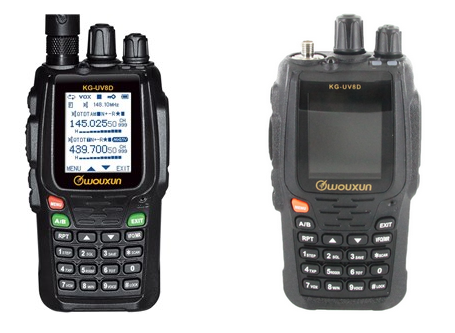 The Wouxun KG-UV8D is one of our most popular amateur handheld transceivers, and our customers like the value added options available for this radio. Many of them like the green A/B and Exit buttons Wouxun included when the radio was first introduced, and wanted them back when the company began to use all black buttons instead. They green buttons did come back, and they've been very popular, but some customers wanted black buttons too. Since we want to make all of our customers happy, we decided to stock them both!
The Wouxun KG-UV8D Dual Band Two Way Radio is now available in your choice of BLACK or GREEN A/B and EXIT buttons!
Whether you choose green or black, the rest of radio package is still the same. To order your UV8D with green or black buttons, Simply choose the button color you want in the drop-down box when ordering. That's all there is to it!
[related_products is_auto_added="1"]
The Wouxun KG-UV8D Dual Band Two Way Radio is now available in your choice of BLACK or GREEN A/B and EXIT buttons!
The convenience of the typical cell phone is irrefutable. It allows you to send a photo, text a message, or dial a number and speak to almost anyone, almost anytime, almost anywhere in the world.
While not as widely used by the public as cellular telephones, it is not uncommon to find many people using two way radios for both personal and business applications. Consumer FRS and GMRS walkie talkies are widely used for home and recreational activities. Business radios are used extensively in many commercial, industrial, municipal and government agency operations, and in some cases are used exclusively.
But wait. If cell phones are as powerful, popular and easily accessible as they are, why not just use a phone instead of a radio? For that matter, why use a two way radio at all?
The truth is, there are many advantages to using two way radios over cell phones in many applications and situations. In fact, considering the options, it is rather astonishing how many businesses, particularly smaller companies, don't consider using radios at all and instead opt to use cell phones for one-to-one short range communications between employees.
To find out which option you should choose, let's compare the two.
Cell Phones:
- are best for long distance communications.
- are in use almost everywhere; Almost everyone has one.
- are expensive; they require a service subscription with a monthly service fee.
- cannot operate without active cell towers and service within range of the phone.
- do not require a license to operate.
- typically require a one or two year contract for service.
- may incur additional fees when monthly usage is exceeded.
- incur roaming charges when out of the home area of service.
- are generally not impact resistant, waterproof or otherwise sufficiently durable for many business uses.
- may not work well or at all in some rural or remote areas.
- include text message capabilities.
- require you to dial a number and wait for the call to connect, which can take thirty seconds or longer.
- feature group calls which involve dialing multiple numbers and establishing multiple connections.
Two Way Radios
- are best for short range communications.
- are not as commonly used as cell phones, but very easy to obtain and use.
- are typically more rugged and durable than cell phones; many are fully waterproof, submersible and even float!
- usually cost much less than cell phones.
- do not require contracts.
- do not incur monthly usage fees.
- do not have over limit usage fees.
- do not have roaming charges.
- Airwaves are free.
- may require an FCC license to operate on some frequencies or bands. Some are "licensed by rule" and do not require the purchase of a license. Read Types of Two Way Radios for details.
- only requires a one-time purchase of the radio (and a license, if required).
- require line-of-site transmission and reception.
- work well within a limited line-of-sight range in rural or remote areas.
- Some digital radios have text message capabilities.
- provide instant communcation with no wait time. Press the PTT button and transmit instantly. Simply turn the radio on to listen.
- group calls are simple. Turn on the radio to listen. Simply press the PTT button to talk to the group.
Comparing the two, it isn't difficult to determine two distinct advantages two way radios have over cell phones for many recreational activities and commercial applications. One huge difference is the cost. Even considering the cost of obtaining the most expensive license to operate a GMRS or business radio, cell phones can cost more to own and operate, a lot more.
For instance, consider the family that takes frequent hiking trips out of their home cell service area. Roaming charges can add up fast, even on a family plan, and there is no guarantee of service in the area of their hiking excursion. Taking a couple of $200 to $400 cell phones out on the trail and into the elements is also a risky proposition, unless of course, money is no object.
However, a GMRS license currently costs $70 and covers the entire family. A pair of high end Midland GXT1000 radios cost considerably less than one $200 cell phone. These radios are also a lot more durable and can take more punishment from the outdoors. Their chances of survival are considerably higher than the phone. If the hikers are using FRS frequencies, the cost is even lower, because no license is required to operate on the Family Radio Service. In this scenario, using two way radios for short range communications between members of a group just makes more sense.
This is particularly true in a commercial environment. In fact, based on the comparison above, businesses and organizations that require employees to use cell phones for localized, short range two way communications within relatively close proximity to one another instead of business radios can actually reduce or impede the efficiency of their operations very quickly, ultimately wasting time, resources, and, of course, money.
One of the greatest advantages of using two way radios over cell phones in any environment is the ability for simple, instant communication. Instant means just that. You simply pick up the device, press one button and talk, or even simpler, just listen. It doesn't get much simpler than that.
There is an old axiom about using the right tool for the right job. In the case of cell phones and two way radios, this is especially true. Each has their place, to be sure.
However, while a cell phone is useful for one-to-one, full duplex conversations across great distances, It isn't usually the best choice for instant, "always on" group, team or one-to-one communications over short distances or within a limited, confined area. In such situations, the two way radio is usually a more efficient, economical and overall practical choice.[related_products is_auto_added="1"]
It isn’t difficult to determine two distinct advantages two way radios have over cell phones for many recreational activities and commercial applications.
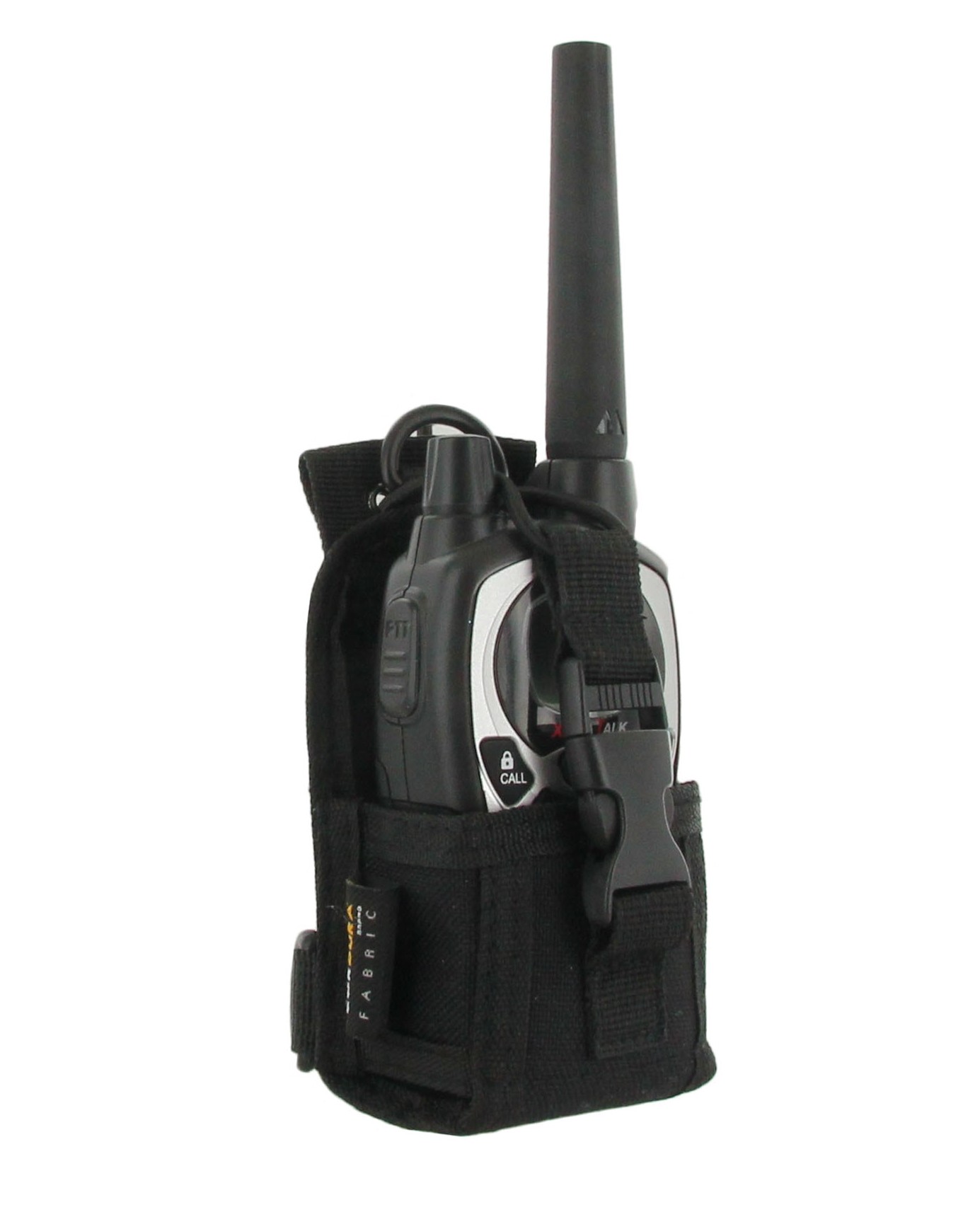 A portable handheld two way radio needs a portable radio carrying case, and they are not always easy to find. Radios come in varying shapes and sizes and not all of them have a case designed for every specific make or model. A case that is universally compatible with most, or even all of them is not very common, and a good one that can handle the rigors of everyday use is a tall order indeed. That is, it was, until now.
The XLT CS200G is here!
The XLT CS200G Universal Two Way Radio Carrying Case is designed for compatibility with many different brands and models of portable handheld radios. Based on the popular XLT CS100G, it improves on the original with a better design, higher quality materials, and solid construction for a heavier duty look and feel that will allow you to carry your walkie talkie more securely with confidence.
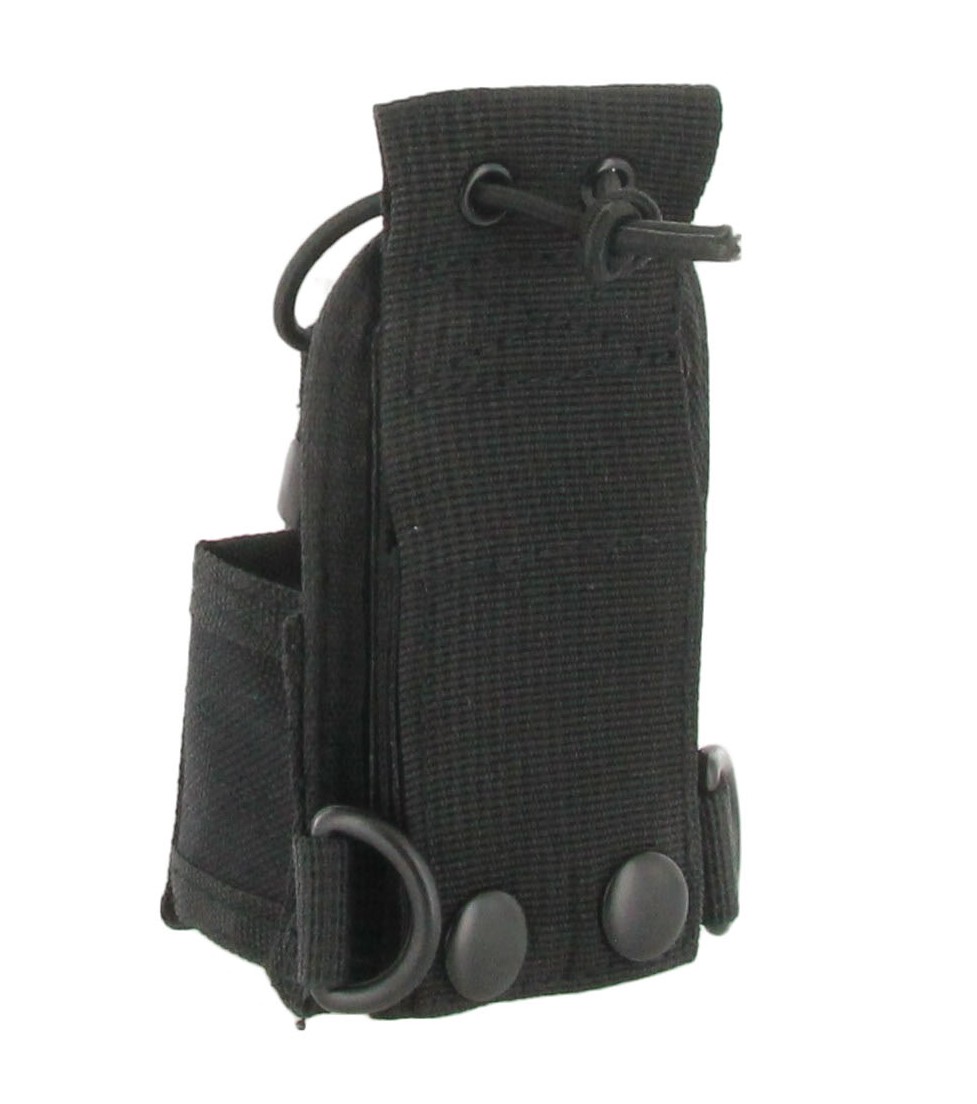 The CS200G is made of Cordura® fabric coated with DuPont™ Teflon® to repel oil and water. Liquids such as water will bead instead of soak the material to protect the radio and make the case easier to keep clean.
The belt loop is large and can accommodate rather wide or thick belts. It loops around the belt and secures with a combination of hook-and-loop fasteners and two large metal snaps. The belt loop assemblies on some cases are often riveted or glued to the product. This isn't the case with the CS200G. The loop is stitched onto the case, giving it a more durable, heavy duty construction to reduce the risk of tearing or separation when handling heavier radios.
Once seated in the case, the radio is secured in place with a heavy duty elastic cord the stretches over the radio and locks into the large clip on the front. The cord keeps the radio seated tightly in the case while it leaves the top and upper end of the radio open for the antenna and easy access to knobs, buttons and audio accessory ports.
The CS200G also includes a three point harness that clips to rings on the bottom sides and top of case. The harness is adjustable and the clips allow for easy removal of the harness from the case.
We haven't yet tested the CS200G with every radio we sell, but it does seem to fit with most consumer FRS and GMRS walkie talkies such as Cobra, Garmin, Midland, Motorola, Olympia and Uniden, as well as all of our Baofeng and Wouxun amateur handheld transceivers and a lot of our business radios, including popular Blackbox, Icom, Kenwood, Motorola, Olympia and Vertex models. It also works with some handheld marine radios. We even tried it with one of our Uniden handheld scanners and it fit right in the case, nice and snug.
We're still checking it out ourselves, but so far the XLT CS200G has proven itself to be quite the universal case, indeed. With improved design, quality and construction over its predecessor, the CS200G is sure to become the case of choice for many two way radio operators.[related_products is_auto_added="1"]
The XLT CS200G Universal Two Way Radio Carrying Case is designed for compatibility with many different brands and models of portable handheld radios.
Recently we reported an issue with the Icom BP279 battery pack used in the new F1000 and F2000 series business radios. Icom took this issue very seriously, and so did we, halting sales of the radios and the battery pack until the issue was resolved.
We now have good news! We are happy to report that Icom resolved the issue with the BP279 battery pack and the new, improved version is now shipping. We received the new battery packs today and resumed sales of the F1000/F2000 series and the battery on our site for immediate delivery from our warehouse.
Icom requests all customers who have the old BP279 battery pack to stop using it and return it immediately for replacement by Icom free of charge. If you purchased the radios from Buy Two Way Radios, you don't need to do anything. We will take the initiative and automatically ship the new replacement battery to you with a return shipping label to return the old one.
As we mentioned in our previous announcement, we will ship them to your original shipping address provided to us when you placed your order. If you need your replacement batteries shipped to another address, please contact us. You can reach us by e-mail, phone, or through our online chat.
[related_products is_auto_added="1"]
We are happy to report that Icom resolved the issue with the BP279 battery pack and the new, improved version is now shipping.
If you work in a hazardous environment or around flammable or explosive materials, the use of a standard cell phone or radio is out of the question. Such a situation requires an intrinsically safe two way radio. This type of radio is specially designed to prevent the emission of heat or sparks that could potentially ignite fuel, gasses, sawdust, or other hazardous, combustible materials and cause a fire or sudden explosion.
Companies and organizations that operate in hazmat environments every day typically do (or should) use intrinsically safe radios exclusively. Others include intrinsically safe two way radios in their fleets of radios for the occasional situation in which such a need may arise.
If your entire fleet consists of only two way radios manufactured as intrinsically safe, no worries. You're covered whether they are used in hazardous situations or in regular, safe environments.
However, if you have both types of radios together in your fleet, is this a good idea? Should you mix intrinsically safe radios with radios that are not intrinsically safe?
The simple answer is a resounding NO. You should never mix the two. It's a very risky practice, and here's why.
An intrinsically safe two way radio generally looks about the same as regular version of the same make and model. While there may be an occasional cosmetic difference, it usually isn't very noticeable.
For instance, An Icom IC-F4161 comes in both a standard and intrinsically safe version. So does the Vertex Standard VX-451. The intrinsically safe version of each radio looks almost identical to the standard version when visually inspected, until you read the labels on the battery packs or backplates of the radios themselves, which requires removal of the battery packs. This can cause a lot of confusion, because unless you closely inspect the radios, it is difficult to tell them apart.
In a hazmat situation, this sort of confusion can become hazardous in itself, as it increases the chance of the wrong radios being used.
It isn't just the radios, either. Intrinsically safe radios require the use of intrinsically safe accessories. The most obvious, of course, are the batteries, but speaker microphones with PTT (Push-To-Talk) buttons and a few other accessories that can cause a brief spark are potentially dangerous to use in a hazmat environment as well, and should be replaced with their intrinsically safe counterparts.
So, if you can't mix the two, what should you do? What are the options?
If you use radios frequently in both a hazmat and a non-hazmat environment, the obvious solution is to simply go intrinsically safe all the way. It's more expensive, but in the long (and short) run, it's safer and provides peace of mind.
However, if your radios are primarily for use in a safe operating environment but are occasionally used in hazardous situations or brief encounters with potentially hazardous or flammable materials and you need to have both types of radios handy, there is a solution.
Create two separate fleets of radios and keep both types of radios away from each other. This goes for the accessories, too. Keep one fleet or the other stored away or otherwise secured until it is needed, then completely swap out the two types of radios with all of your users.
Also, mark or color code the radios and affected accessories to clearly distinguish between the two types, so just in case something gets mixed into the wrong fleet, you will know right away.
An intrinsically safe radio is a good idea to have when working around hazardous materials, but mixing them in with standard, non-intrinsically safe radios is a bad one. Do it smart and keep intrinsically safe radios and their intrinsically safe accessories separate from regular radios and you will help to minimize the chances of making a hazardous situation worse.
For a more in-depth discussion about intrinsically safe two way radios, listen to The Two Way Radio Show Podcast TWRS-18 - Intrinsically Safe Radios[related_products is_auto_added="1"]
If you have both types of radios together in your fleet, is this a good idea? Should you mix intrinsically safe radios with radios that are not intrinsically safe?
Motorola Solutions recently announced its intent to cancel VHF and UHF versions of some popular analog business radios. The models to be discontinued are the Motorola CP200, CP200XLS and PR400 portables. Motorola also discontinued the CM200, CM300 and PM400 mobile radios. The last day to order these models was November 22, 2014, and the last ship date is December 22, 2014.
The CP200 was Motorola's most popular business radio, which may leave many businesses that use them wondering what to do. If you are one of the many CP200 users suddenly facing the demise of your favorite radio, don't despair. There are other models that will fill the void and maintain compatibility with your existing CP200 fleet.
The Motorola RDU4160d is a great replacement for the UHF version of the CP200. Like its counterpart, the 4160d operates on 4 watts and meets Mil-STD standards for durability. Battery life is comparable as well, and it is even lighter than the CP200, weighing in at under 11 ounces with the battery pack.
For businesses on VHF frequencies, the Motorola RDV5100 is a way to go. It meets the VHF version of the CP200 with 5 watts of power, Mil-STD C, D, E, and F standards and boasts a similar battery life to the RDU4160d.
In addition, both the UHF RDU4160d and the VHF RDV5100 are compatible with the same Motorola audio accessories used for the CP200 radios. This makes things even better, since it won't require a complete overhaul of radio accessories to accommodate new radios to replace the old ones as time goes on.
Of course, there are other alternatives, as well. One notable model from Vertex Standard is the VX-231. It is available in both UHF and VHF versions with wattage, durability, battery life and weight comparable to the Motorola CP200, RDU4160d and RDV5100 radios.
The CP200 may soon be a thing of the past, but there is no cause for concern. There are plenty of options available to fill the void and maintain compatibility across the fleet with no worries.
Update: The Motorola CP200 was replaced by the Motorola CP200d.
[related_products is_auto_added="1"]
If you are one of the many Motorola CP200 users suddenly facing the demise of your favorite radio, don’t despair. There are other models that will maintain compatibility with your existing CP200 fleet.