 Spring is here, and it’s the perfect time to upgrade your communications gear during the Spring into Savings promotion at Buy Two Way Radios!
From March 20 through April 3, 2026, you can take advantage of limited-time discounts on some of the most popular Wouxun handheld radios for GMRS and business use. If you need reliable radios for work, outdoor adventures, or family communication, this sale offers an excellent opportunity to save on high-quality comms.
During the promotion, several customer-favorite Wouxun models are available at special prices. Take $20 off the Wouxun KG-S88G Plus, a powerful and feature-rich GMRS handheld, as well as $20 off the Wouxun KG-Q10G and KG-Q10H models. You can also save $10 on the Wouxun KG-905G Plus and $10 on the Wouxun KG-915G, both well-known for their durability and dependable performance.
Businesses can benefit too! Buy six Wouxun business radios and receive one free, making it easier and more affordable to outfit your entire team with professional-grade communications.
These special offers are only available for a limited time, so don’t wait too long to take advantage of them. If you’ve been thinking about adding new radios to your lineup or expanding your current system, the Spring into Savings sale is a great time to do it. Visit Buy Two Way Radios today to explore the eligible Wouxun models and make the most of these seasonal savings before the promotion ends on April 3, 2026.
Spring Into Savings – Promotion Details
| Offer | Eligible Model(s) | Savings |
|---|---|---|
| Buy 6, Get 1 FREE | Wouxun Business Radios | FREE Radio |
| Instant Discount | Wouxun KG-S88G Plus | $20 OFF |
| Instant Discount | Wouxun KG-Q10G / KG-Q10H | $20 OFF |
| Instant Discount | Wouxun KG-905G Plus | $10 OFF |
| Instant Discount | Wouxun KG-915G | $10 OFF |
Promotion Dates: March 20 – April 3, 2026
[related_products is_auto_added="1"]
Spring is here, and it’s the perfect time to upgrade your communications gear during the Spring into Savings promotion at Buy Two Way Radios! From March 20 through April 3, 2026, you can take advantage of limited-time discounts on some of the most popular Wouxun handheld radios for GMRS and business use. If you need […]
Many manufacturers claim their radios are water resistant to some degree, but how well do they actually hold up when they take a swim? We decided to find out. In this video, Steven from our tech department at Buy Two Way Radios dunks seven different Wouxun handheld radios completely under water and examines how well they transmit while taking the plunge. Some radios handle the plunge better than others, and a few might surprise you. Let's see which ones survive the dive!
Radios tested:
- KG-805M MURS Radio (Identical to the rest of the KG-805 Series)
- KG-905G (Plus) GMRS Radio
- KG-S65G GMRS Radio
- KG-S84B Business Radio
- KG-935G Plus GMRS Radio
- KG-S88G (Plus) GMRS Radio
- KG-Q10G GMRS Radio (Identical to the KG-Q10H)
Want more videos about 2-way radios? Browse our video blog and subscribe to our YouTube channel![related_products is_auto_added="1"]
Many manufacturers claim their radios are water resistant to some degree, but how well do they actually hold up when they take a swim? We decided to find out. In this video, Steven from our tech department at Buy Two Way Radios dunks seven different Wouxun handheld radios completely under water and examines how well […]
Many business and high end consumer two way radios include a feature called Busy Channel Lockout. This feature is often referred to as BCL or BCLO. But what is Busy Channel Lockout? How does it work? When, if ever, would you use it?
In this episode of Radio 101, Tommy explains what the Busy Channel Lockout is, how it works and how to use it when transmitting on your two way radio.
Want more videos about 2-way radios? Browse our video blog and subscribe to our YouTube channel!
[related_products is_auto_added="1"]Many business and high end consumer two way radios include a feature called Busy Channel Lockout. This feature is often referred to as BCL or BCLO. But what is Busy Channel Lockout? How does it work? When, if ever, would you use it? In this episode of Radio 101, Tommy explains what the Busy Channel […]
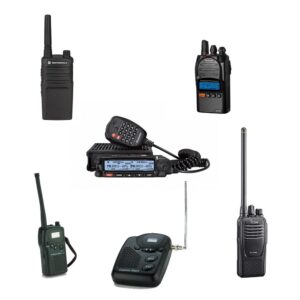 The Multi-Use Radio Service, or MURS, is still the quiet professional of the personal radio world in 2026. It does not generate the same excitement as GMRS, and it does not offer the experimentation and technical range of Amateur Radio. Even so, MURS continues to hold a unique place for users who want simple, license-free communications on VHF with surprisingly practical real-world performance.
The FCC defines MURS as a short-distance personal or business voice or data service on five channels in the 151–154 MHz range, licensed by rule with no individual license required. Current MURS rules cap transmitter output power at 2 watts, allow voice and data, and prohibit repeater operation, signal boosters, store-and-forward packet use, and connection to the public switched telephone network.
One current point of interest is the FCC’s broader “Delete, Delete, Delete” deregulation effort. MURS is technically part of that larger Part 95 cleanup, but the changes adopted so far are narrow and administrative, not a rewrite of the service. In the MURS section, the FCC removed the subpart scope rule and pared back duplicative transmitter certification language. It did not adopt a new power limit, authorize repeaters, or otherwise expand core MURS operating privileges. So, while radio enthusiasts may speculate about future changes, as of early March 2026, the familiar 2 watt ceiling and no-repeater rule remain in place.
Where MURS has become more interesting is as a practical alternative to crowded GMRS and FRS channels. GMRS remains attractive because it allows higher power and repeaters, but it still requires a $35 FCC family license. MURS does not. Add the fact that MURS radios are less common at mass retail, and its five channels often stay noticeably quieter, especially outside commercial hot spots, and it becomes a serious contender for wider adoption. In many outdoor settings, that matters. VHF does not inherently outperform UHF everywhere, but in woods, rolling terrain, and open rural areas, MURS can be a very effective short-range tool. External antennas are also allowed, subject to MURS antenna height limits, which gives users more flexibility than many people expect from a license-by-rule service such as FRS.
There is also some confusion around MURS and digital off-grid systems. The FCC rules do permit MURS data transmissions, telemetry, and certain digital emission types, so data on MURS is legal in principle. But MURS is not Meshtastic. Meshtastic is built around LoRa hardware commonly used in the 902–928 MHz ISM band under different rules, not on MURS channels. That means the practical 2026 trend is not really “Meshtastic on MURS,” but rather users pairing a MURS handheld for clear voice with a separate 900 MHz mesh node for texting and location sharing.
Meanwhile, one longstanding MURS wrinkle remains: stations grandfathered from older Part 90 business authorizations may continue operating under those legacy terms, which helps explain why some businesses still show up on MURS frequencies today.
There is one more thing to consider. It's the price. While both MURS and GMRS use handheld and mobile radios, the hardware market for each service is very different. GMRS has become extremely popular in recent years, and that large consumer market has pushed prices down for many entry-level models. Today it is common to find basic GMRS handheld radios selling in the $30 to $80 range, particularly from manufacturers producing high-volume consumer products.
MURS radios, on the other hand, are often marketed toward business or professional users, which can drive prices higher. Many dedicated MURS handhelds fall in the $70 to $150 range, and rugged commercial models can cost even more, depending on their durability and feature set. The mobile/base station units, the few that exist, are even more expensive. Because the MURS equipment market is smaller and more specialized, the hardware is not always cheaper than GMRS radios as some people may assume.
Even so, cost alone does not tell the whole story. For users who value clear channels, simple operation, and reliable VHF performance in rural or outdoor environments, MURS continues to be a practical and dependable radio option in 2026.
| MURS vs. GMRS in 2026 | MURS (VHF) | GMRS (UHF) |
|---|---|---|
| Licensing | None (Licensed by Rule) | $35 Fee (Family License) |
| Best Terrain | Woods / Rolling Hills | Cities / Obstacles |
| Congestion | Very Low | Higher in populated areas |
| Antennas | Removable / External allowed | Removable / External allowed |
| Repeaters | Prohibited | Allowed |
| Starting Cost | $80+ | $30+ |
[related_products is_auto_added="1"]
The Multi-Use Radio Service, or MURS, is still the quiet professional of the personal radio world in 2026. It does not generate the same excitement as GMRS, and it does not offer the experimentation and technical range of Amateur Radio. Even so, MURS continues to hold a unique place for users who want simple, license-free […]
 NXDN is a popular digital two-way radio protocol used in commercial, industrial, and public safety communications. If you’re programming or operating an Icom IDAS or Kenwood NXDN digital radio, one setting you’ll almost certainly encounter is the RAN code. Understanding what RAN codes are and when to use them can help you get cleaner communications and avoid unwanted interference on shared frequencies.
What Is a RAN Code?
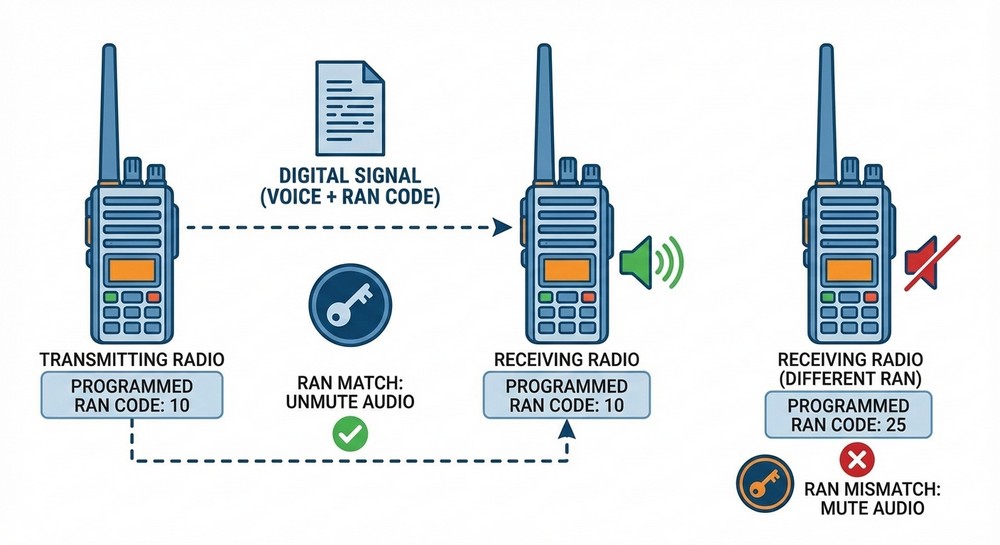
RAN stands for Radio Access Number. In NXDN digital radios, the RAN code acts as a digital access control code that determines which radios are allowed to communicate with each other on the same RF channel.
Functionally, a RAN code in NXDN serves a role similar to CTCSS tones or DCS codes in analog FM radios. However, instead of being an analog sub-audible tone, the RAN code is embedded digitally within the NXDN signal itself.
NXDN RAN codes range from 0 to 63, giving users 64 possible values to choose from.
How RAN Codes Work
When an NXDN radio transmits, it sends its programmed RAN code along with the digital voice data. Receiving radios listen for that specific RAN code and will only unmute their audio if the incoming signal matches the programmed value.
If the RAN code does not match, the receiving radio stays muted, the call is ignored, and no audio is heard, even though the RF signal may be strong. This system allows multiple NXDN users to share the same frequency without constantly hearing each other’s traffic, provided each group is using a different RAN code.
When RAN Codes Are Used
RAN codes are commonly used in the following situations:
Shared or Licensed Frequencies
In business and commercial radio systems, it’s common for multiple users or organizations to operate on the same licensed frequency. RAN codes help keep communications separated and organized.
Reducing Unwanted Traffic
If your radios are picking up digital noise or other NXDN users on the same channel, setting a RAN code prevents your radio from opening squelch for transmissions that aren’t intended for you.
Private Group Communications
RAN codes are often used to define a basic talkgroup structure in simple NXDN systems, especially when a full trunked system isn’t required.
Repeater Access Control
Many NXDN repeaters are configured to respond only to a specific RAN code. Radios with the wrong RAN will not key up the repeater or pass audio through it.
RAN Code vs. Encryption
It’s important to understand that RAN codes do not provide encryption. While they control access and reduce interference, anyone with an NXDN radio programmed to the same RAN code can still monitor the channel. For secure communications, NXDN radios must use proper digital encryption features, where legally permitted.
Programming Considerations
All radios that need to communicate together must be programmed with:
- The same frequency
- The same NXDN mode (conventional, simplex, or repeater)
- The same RAN code
If even one of these settings doesn’t match, the communication between the transmitting and receiving radios will fail.
RAN codes are a fundamental part of NXDN digital radio operation. They make shared frequencies more manageable, reduce unwanted traffic, and help keep communications organized, all without adding unnecessary complexity. If you’re setting up a small business radio system or expanding an existing NXDN deployment, understanding RAN codes is key to getting the most out of your digital radios.[related_products is_auto_added="1"]
NXDN is a popular digital two-way radio protocol used in commercial, industrial, and public safety communications. If you’re programming or operating an Icom IDAS or Kenwood NXDN digital radio, one setting you’ll almost certainly encounter is the RAN code. Understanding what RAN codes are and when to use them can help you get cleaner communications […]
As digital two way radios continue to grow in popularity, DMR (Digital Mobile Radio) is often the first format users encounter when moving beyond traditional analog FM. While DMR offers clearer audio and more efficient use of spectrum, it also introduces a few new programming concepts that can be confusing at first. One of the most important and most misunderstood is the color code.
What Is a DMR Color Code?
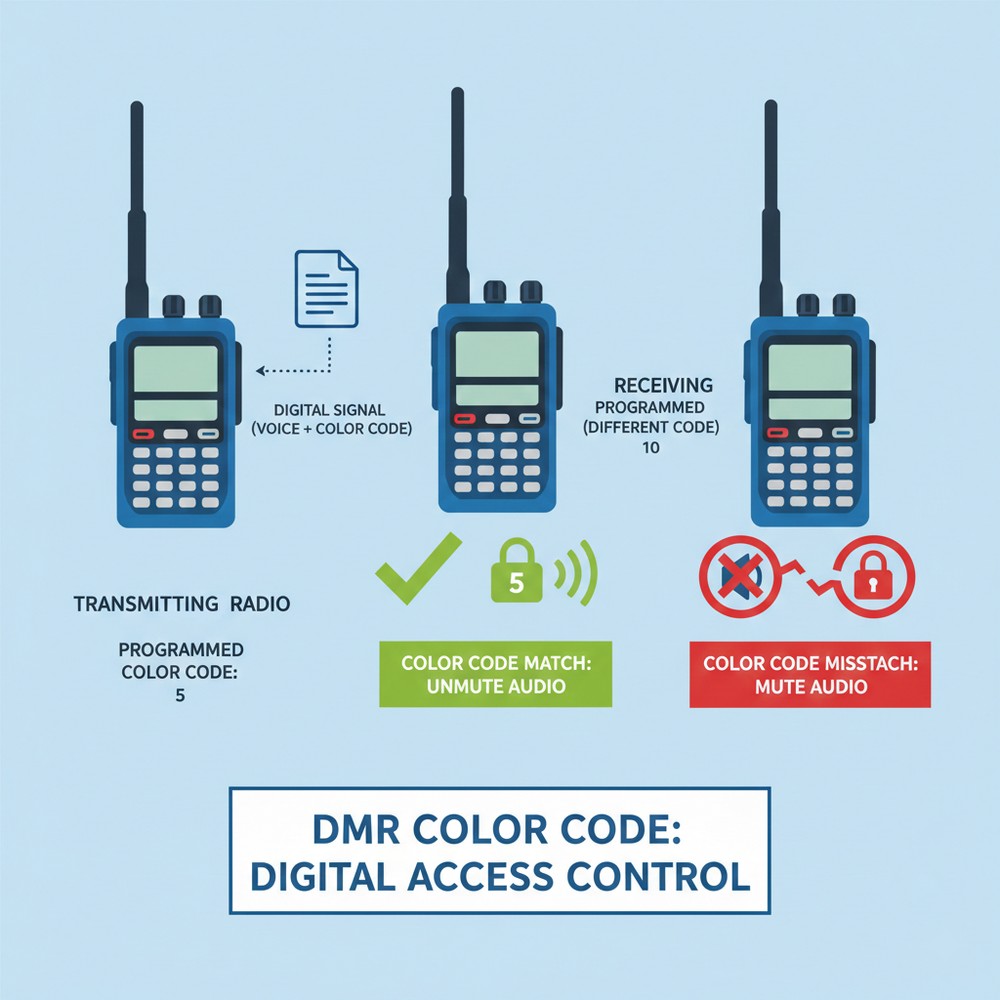
In simple terms, a DMR color code is a digital access control setting that determines which radios are allowed to communicate with each other on a shared frequency.
DMR color codes are numbered from 0 through 15, giving a total of 16 possible options. Every DMR channel must have a color code assigned. Unlike analog radios, where a PL or DCS tone may be optional, DMR requires a color code in order to work at all.
For communication to occur, all radios involved must match the following four requirements:
- Frequency
- Color code
- Time slot
- Talkgroup
If any one of these settings is incorrect, the radio will either not hear traffic or will be unable to transmit successfully.
Why Color Codes Are Used
Color codes serve the same basic purpose as CTCSS or DCS tones in analog FM systems. They allow multiple users to share the same RF channel without hearing each other’s conversations.
When a DMR radio receives a signal, it checks the incoming digital data for the correct color code. If the code does not match what the radio is programmed for, the transmission is ignored. This helps reduce unwanted traffic and keeps conversations separated, especially in busy radio environments.
Color Codes and DMR Time Slots
One of the key advantages of DMR is its use of Time Division Multiple Access (TDMA). TDMA divides a single frequency into two independent time slots, allowing two separate conversations to occur at the same time.
The color code applies to both time slots, while time slots and talkgroups determine how traffic is routed. This means a properly programmed DMR channel must include all three elements working together:
- Color code for access
- Time slot for channel separation
- Talkgroup for user grouping
Common Color Code Practices
There is no universal standard that assigns a specific meaning to any color code number. However, some common practices have emerged over time. Color Code 1 is frequently used on repeaters and Color Code 0 is often used for simplex or test channels. Other color codes are selected to separate user groups on shared systems.
When programming a repeater channel, the correct color code is usually published by the system owner and must be entered exactly as specified.
If your radio shows signal activity but you hear no audio, the color code is one of the first settings to double-check. A mismatched color code will completely block communication, even if everything else appears correct.
Color codes are a fundamental part of how DMR radios operate. Once you understand that they function like a digital version of analog PL tones, DMR programming becomes far less intimidating. With the correct color code, time slot, and talkgroup in place, digital radios offer efficient, reliable communication with impressive flexibility.
[related_products is_auto_added="1"]As digital two way radios continue to grow in popularity, DMR (Digital Mobile Radio) is often the first format users encounter when moving beyond traditional analog FM. While DMR offers clearer audio and more efficient use of spectrum, it also introduces a few new programming concepts that can be confusing at first. One of the […]
The Wouxun KG-935G Plus GMRS Two Way Radio includes a really handy feature called the PF Key Quick Guide. This guide lets you instantly see what your two programmable side keys, known as PF1 and PF2, are set to do. How does it work?
In this episode of Radio 101, Tommy explains what the PF Key Quick Guide is and how to use it.
Want more videos about 2-way radios? Browse our video blog and subscribe to our YouTube channel!
[related_products is_auto_added="1"]The Wouxun KG-935G Plus GMRS Two Way Radio includes a really handy feature called the PF Key Quick Guide. This guide lets you instantly see what your two programmable side keys, known as PF1 and PF2, are set to do. How does it work? In this episode of Radio 101, Tommy explains what the PF […]
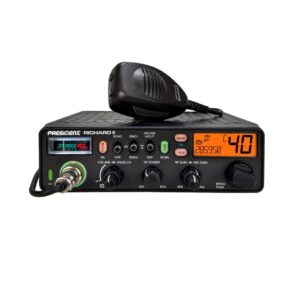 President Electronics has revisited one of its most recognizable 10 meter mobile platforms with the release of the President Richard II AM/FM Ham Radio, updating a classic design with modern features that better reflect how amateur operators use HF radios today. Rather than reinventing the platform, the Richard II builds on the proven foundation of the original Richard while adding improved noise reduction, enhanced protection features, and a more refined user interface for mobile operation.
Operating on the 10-meter amateur band, the President Richard II offers AM and FM modes with up to approximately 40 watts (50 watts PEP) output, giving operators strong mobile performance in a compact, OEM-sized chassis. The front panel layout remains intuitive and familiar, but the radio now features a multi-color LCD display, integrated automatic SWR adjustment with audible feedback, and a clearer bar-graph meter for monitoring signal and power levels. These changes make setup and operation faster and more user-friendly, especially for operators new to HF mobile installations.
One of the most notable upgrades in the Richard II is the addition of NRC (Noise Reduction Circuitry) for both transmit and receive. This digital noise reduction system is designed to improve intelligibility in real-world mobile environments, where road noise and electrical interference are unavoidable. The radio also includes voltage protection, SWR protection, and adjustable power limiting, adding safeguards that were not present on the original Richard.
Compared to the original President Richard, the Richard II offers a more refined operating experience overall. While the earlier model established a reputation for solid RF performance, the Richard II expands on that foundation with modern filtering, enhanced menu control, improved display options, and a USB-C charging port capable of powering external devices. These additions reflect how amateur operators actually use mobile radios today.
For hams looking for a compact 10-meter mobile radio that blends classic President design with modern features, the President Richard II is a clear step forward. You can find full details, pricing, and availability on the product page for the President Richard II at Buy Two Way Radios, along with official accessories and support resources.[related_products is_auto_added="1"]
President Electronics has revisited one of its most recognizable 10 meter mobile platforms with the release of the President Richard II AM/FM Ham Radio, updating a classic design with modern features that better reflect how amateur operators use HF radios today. Rather than reinventing the platform, the Richard II builds on the proven foundation of […]
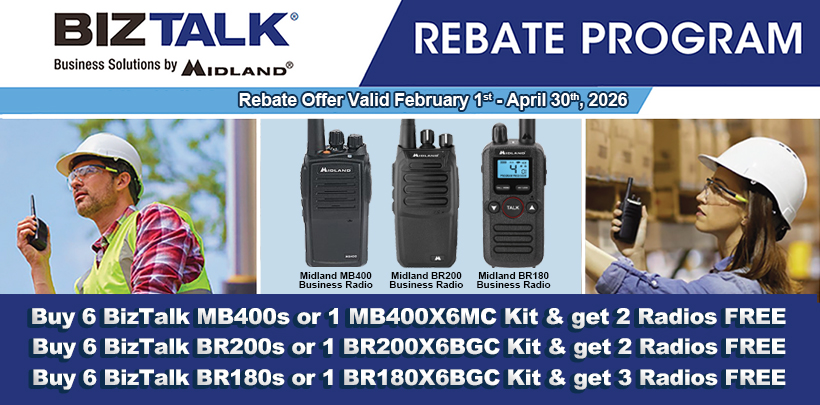
The Midland BizTalk® Buy 6, get 2 Free offer is back once again for 2026! This offer runs from February 1 through April 30, 2026 to start the year off right with extra radios your business comms. It's the same as the Midland BizTalk promos in the past, with one exciting new twist.
As before, when you buy 6 BR200, MB400 business radio or 1 BizTalk six pack radio and multicharger combo, you get 2 FREE radios of that model. And here's the twist. When you buy the Midland BizTalk™ BR180, you get 3 FREE radios. That's right, three! How awesome is that?
Here is a complete list of radios included in this offer.
| Model | Min Purchase | Max Purchase | Free Radio(s) |
|---|---|---|---|
| BR180 | 6 | 60 | BR180 x 3 |
| BR180X6BGC 6 Pack w/Multi-Charger | 1 | 10 | BR180 x 3 |
| BR200 | 6 | 60 | BR200 x 2 |
| BR200 6 Pack w/Multi-Charger | 1 | 10 | BR200 x 2 |
| MB400 | 6 | 60 | MB400 x 2 |
| MB400 6 Pack w/Multi-Charger | 1 | 10 | MB400 x 2 |
This offer is fulfilled by the manufacturer, so the free radio(s) will be shipped when Midland receives and processes your online rebate submission form. Offer valid on up to 60 BR200, BR180 or MB400 radios per customer/company purchased from February 1, 2026 through April 30, 2026. Download the flyer for details. A minimum of 6 BR200 radios, BR180 radios or 6 MB400 radios must be purchased to qualify. Midland's rebate terms and conditions apply.
NOTE: Offer expires at midnight April 30, 2026. All claims must be entered by 11:59pm CST on Sunday, May 31, 2026 to qualify. Redemption submissions received after that date will NOT be eligible regardless of purchase date. All transactions are subject to validation. Offer is good to U.S. residents only and is void where prohibited, taxed or restricted by law..[related_products is_auto_added="1"]
The Midland BizTalk® Buy 6, get 2 Free offer is back once again for 2026! This offer runs from February 1 through April 30, 2026 to start the year off right with extra radios your business comms. It’s the same as the Midland BizTalk promos in the past, with one exciting new twist. As before, […]
If you’ve looked into digital two-way radios, you’ve probably seen two big standards, DMR and NXDN. So what’s the difference, and which one’s right for you?
In this episode of Radio 101, Tommy explains what these two big standards in digital two way radios are, breaks down how they work and what exactly makes them different from one another.
Want more videos about 2-way radios? Browse our video blog and subscribe to our YouTube channel!
[related_products is_auto_added="1"]If you’ve looked into digital two-way radios, you’ve probably seen two big standards, DMR and NXDN. So what’s the difference, and which one’s right for you? In this episode of Radio 101, Tommy explains what these two big standards in digital two way radios are, breaks down how they work and what exactly makes them […]